Gear Review
Best Personal Locator Beacons (PLBs) for Hikers and Travelers (2026)
January 28, 2026
Quick Navigation — Individual Reviews
- → McMurdo FastFind 220 ★ 4.0 — $249.99
- → Ocean Signal rescueME PLB3 ★ 4.4 — $279.99
- → ACR ResQLink View ★ 4.5 — $329.95
- → ACR ResQLink 400 ★ 4.6 — $279.95
In January 2026, a solo hiker who fell and broke her ankle on a remote trail in Olympic National Park activated her personal locator beacon and was rescued by helicopter within 3 hours. PLBs have saved over 50,000 lives worldwide since becoming commercially available. Unlike satellite communicators that require subscriptions, PLBs are one-time purchases with no monthly fees — they simply work when you press the button.
ISOPREP is reader-supported. When you buy through links on our site, we may earn an affiliate commission at no extra cost to you. Learn more
Quick Comparison: Best Personal Locator Beacons for Hikers and Travelers
| Device | Price | Type | Subscription | Best For | Rating |
|---|---|---|---|---|---|
| ACR ResQLink 400 | $280 | PLB | None | Best Overall | 4.8/5 |
| ACR ResQLink View | $330 | PLB + Screen | None | Best Display | 4.7/5 |
| Ocean Signal rescueME PLB3 | $280 | PLB | None | Best Compact | 4.6/5 |
| McMurdo FastFind 220 | $250 | PLB | None | Best Budget | 4.3/5 |
| Garmin inReach Mini 3 Plus | ~$500 | Sat Comm | From $15/mo | Best Messaging | 4.8/5 |
Detailed Reviews
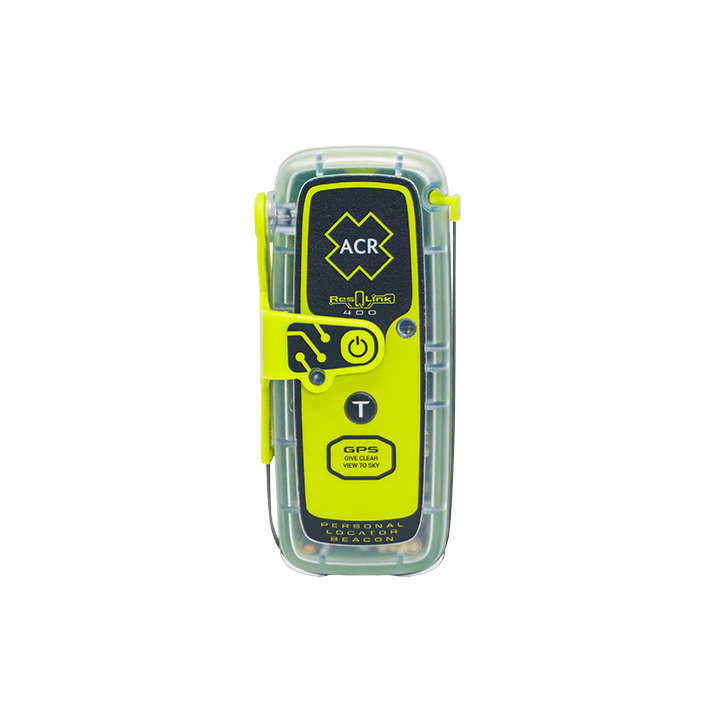
1. ACR ResQLink 400 — $280 — Best Overall
The ACR ResQLink 400 is the gold standard PLB. Weighing 4.6 oz, it transmits your GPS position to the international Cospas-Sarsat satellite rescue network when activated. No subscription, no monthly fees — just press the button in a life-threatening emergency and rescue authorities are notified with your exact location. 5-year battery life in standby, 24+ hours of continuous transmission once activated.
Pros:
- No subscription fees — ever. One-time purchase, lifetime readiness
- 66-channel GPS for precise rescue coordinates
- Waterproof to 5 meters — works in rain, rivers, and ocean conditions
Cons:
- One-way SOS only — no messaging, no status updates, no two-way communication
- No display screen — you can’t confirm your GPS fix or signal status
Our Take: The PLB we recommend for most hikers, travelers, and outdoor adventurers. It does exactly one thing — sends an SOS with your GPS coordinates to rescue authorities — and it does it flawlessly. No subscription complexity, no app pairing, no distractions. Press the button, get rescued.
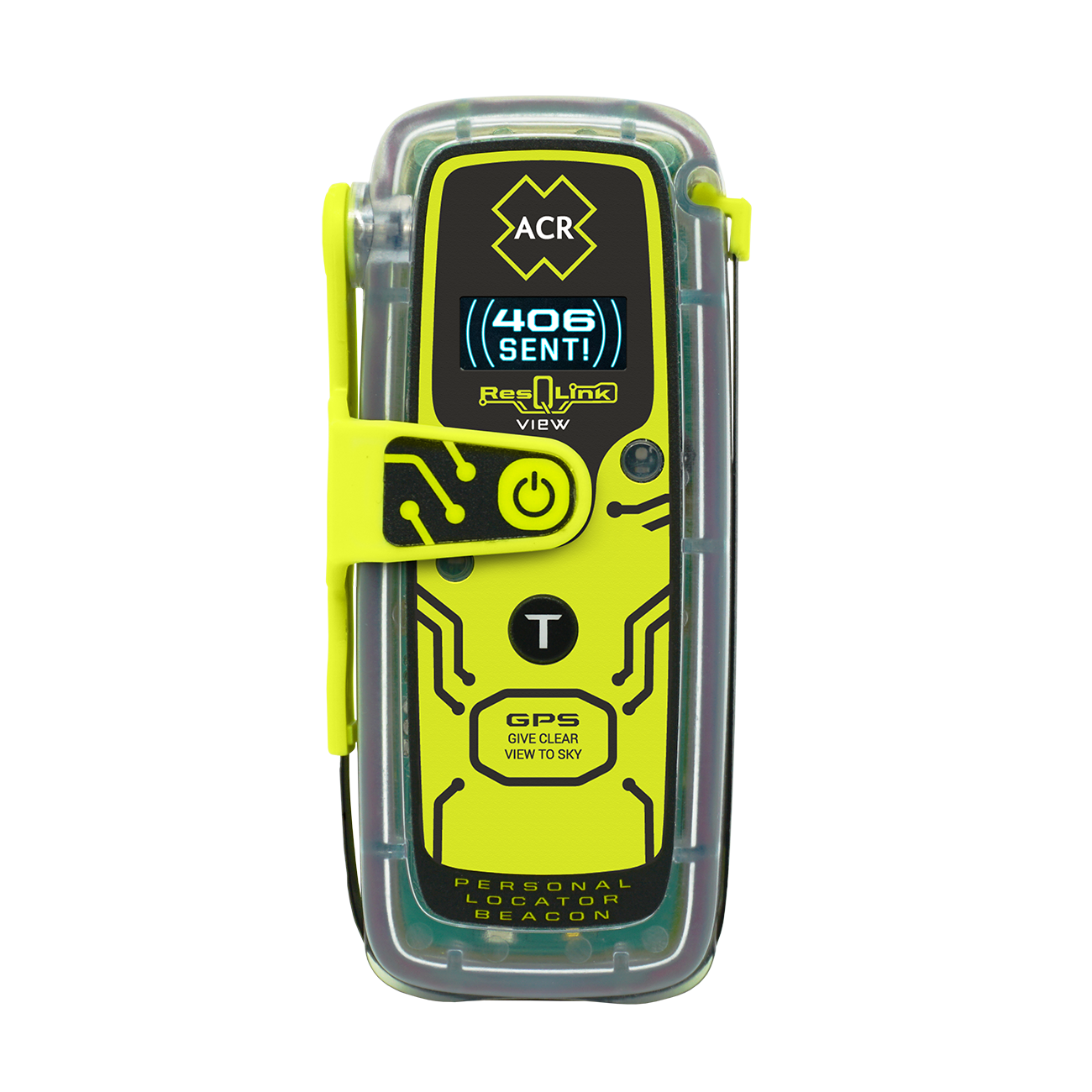
2. ACR ResQLink View — $330 — Best Display
The ResQLink View adds a digital screen to the proven ResQLink platform, showing GPS coordinates, battery status, and signal confirmation. The same Cospas-Sarsat rescue network, same no-subscription model, with the added confidence of visual feedback during activation.
Pros:
- Screen confirms GPS lock and signal transmission — reduces anxiety during emergencies
- No subscription fees with 5-year battery life
- Same proven ACR reliability as the ResQLink 400
Cons:
- $50 premium over the ResQLink 400 for the display feature
- Slightly heavier and bulkier due to the screen
Our Take: Worth the $50 upgrade if peace of mind matters to you. Knowing your signal is transmitting and your GPS is locked reduces stress during what will be one of the worst moments of your life. The screen doesn’t add complexity — it adds confidence.
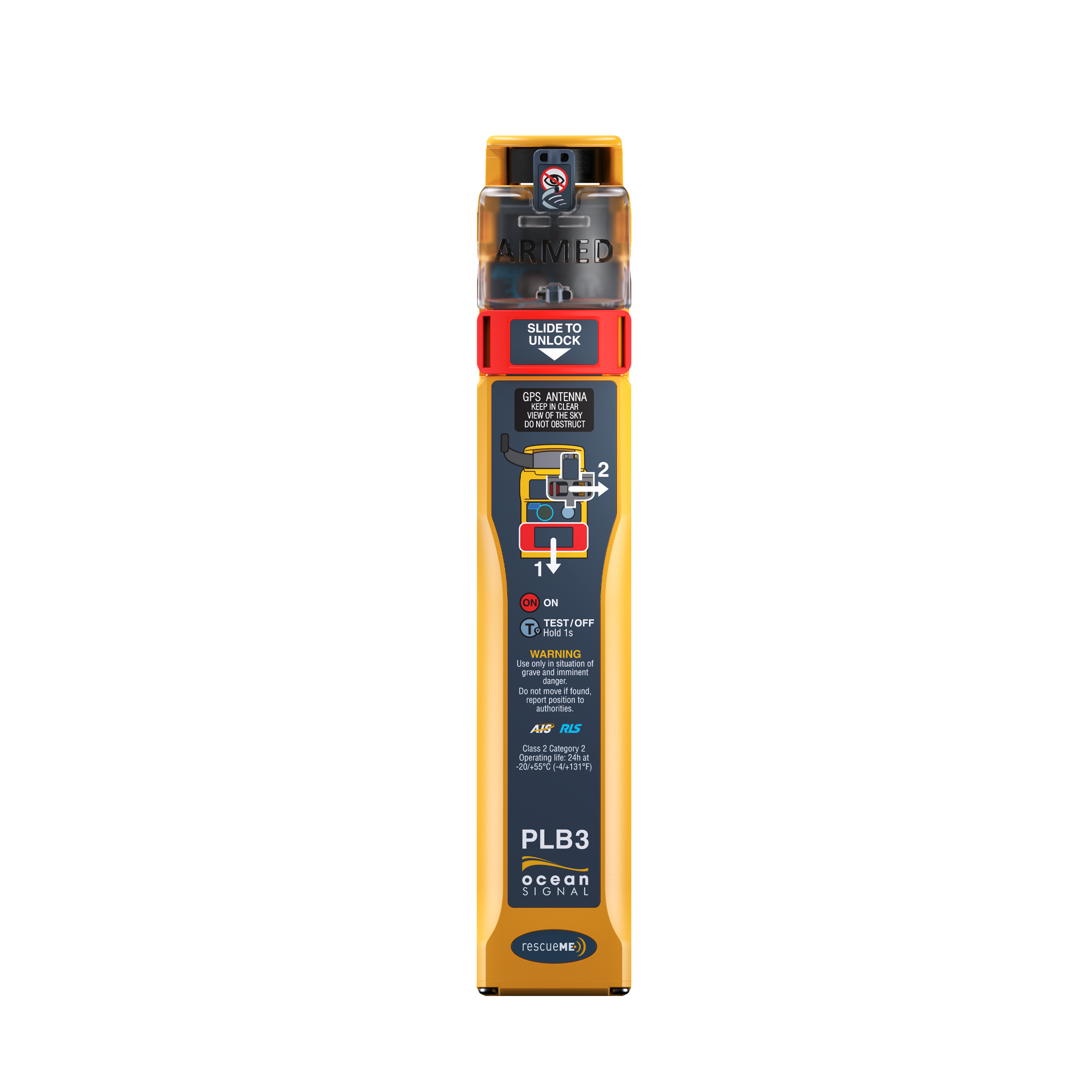
3. Ocean Signal rescueME PLB3 — $280 — Best Compact
The rescueME PLB3 is the smallest and lightest PLB available at just 3.9 oz. Despite its size, it delivers the same Cospas-Sarsat rescue capability with a built-in strobe light for visual signaling. Ideal for ultralight hikers and travelers who count every ounce.
Pros:
- 3.9 oz — smallest and lightest PLB on this list
- Built-in strobe light aids visual location by rescue teams
- No subscription with 7-year battery life — longest on this list
Cons:
- No display screen for GPS or signal confirmation
- Activation process slightly less intuitive than ACR models
Our Take: The best PLB for weight-conscious hikers and international travelers. At 3.9 oz, it disappears into any pack, pocket, or travel bag. The 7-year battery life is the longest on this list — buy it, register it, and forget about it until you need it.
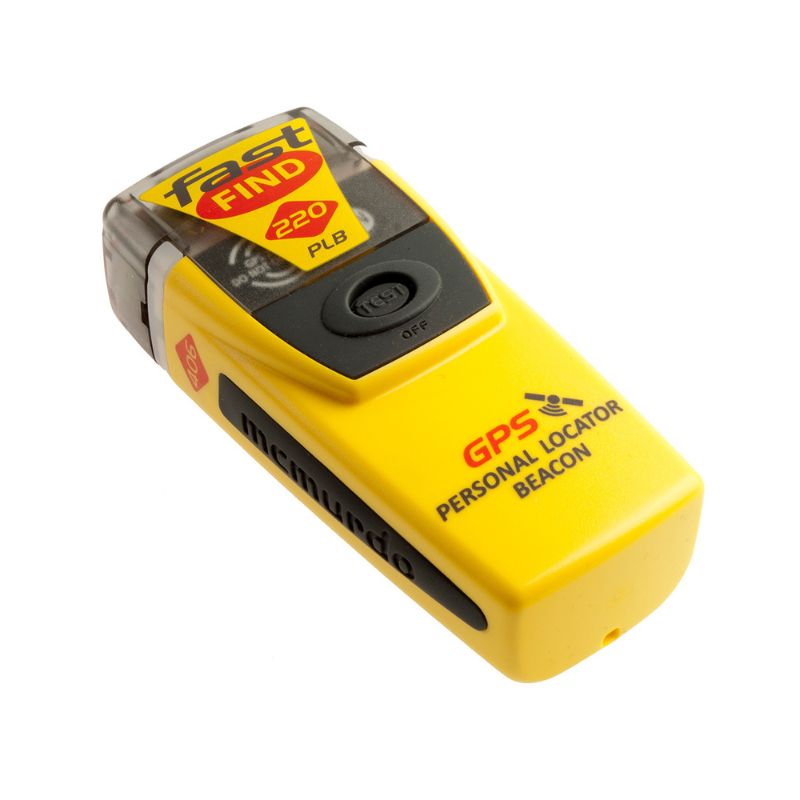
4. McMurdo FastFind 220 — $250 — Best Budget
The McMurdo FastFind 220 is the most affordable PLB on this list at $250. Reliable Cospas-Sarsat transmission with a 6-year battery life and simple one-button activation. A no-frills option that delivers the core life-saving function at the lowest price.
Pros:
- $250 — lowest-cost PLB on this list
- 6-year battery life — second longest
- Simple one-button activation with no complexity
Cons:
- Slower GPS lock time compared to ACR models
- Less refined build quality and ergonomics
Our Take: A solid budget PLB for hikers and travelers who want life-saving capability without paying $280-330. The slower GPS lock is a real trade-off — in an emergency, every minute counts. But for $250 with no subscription, it’s a functional safety net.
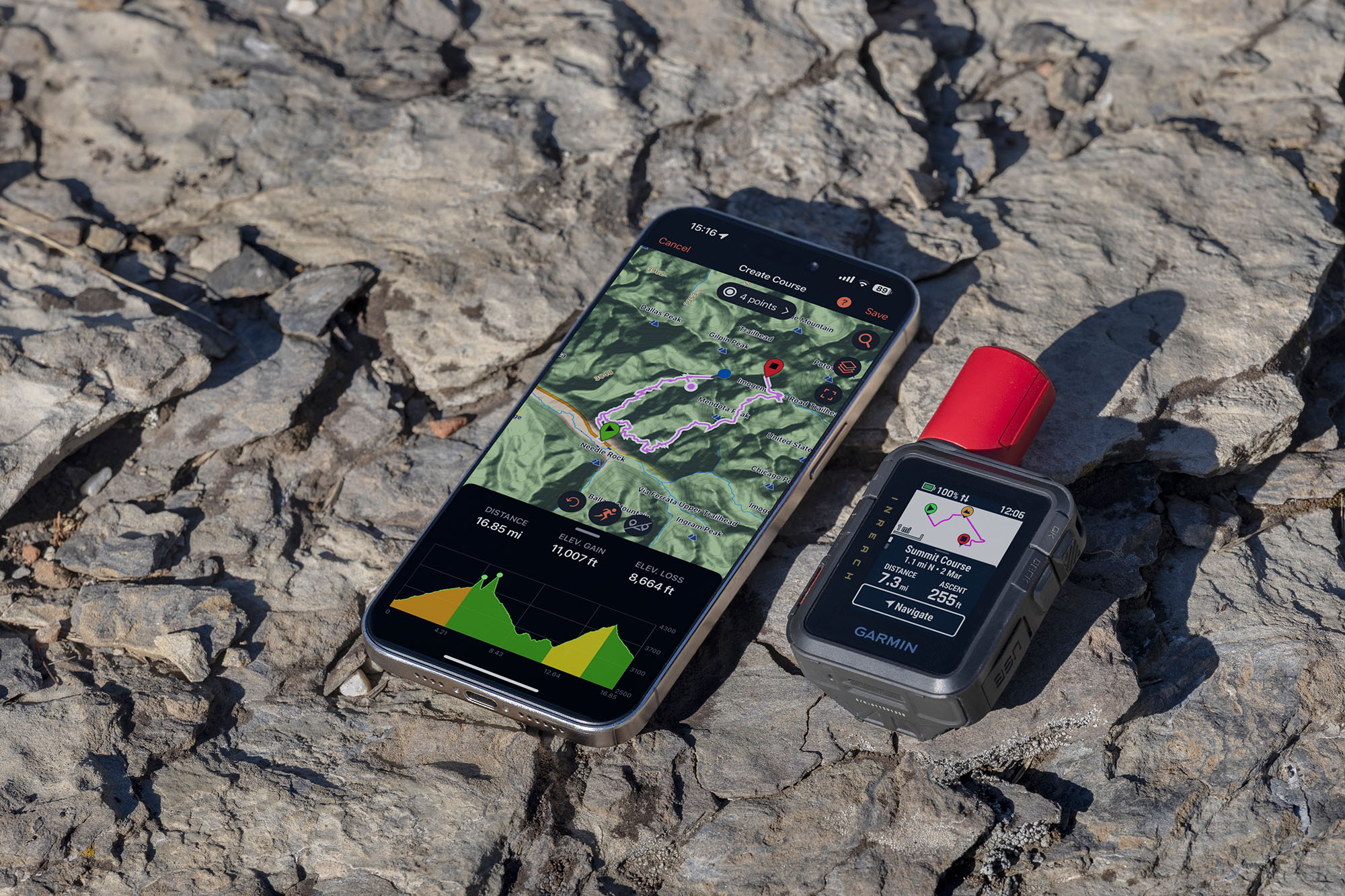
5. Garmin inReach Mini 3 Plus — ~$500 — Best Messaging (Satellite Communicator)
The Garmin inReach Mini 3 Plus is included for comparison — it’s a satellite communicator, not a PLB. It offers two-way text messaging, voice and photo messaging via satellite, location sharing, weather updates, and SOS functionality through the global Iridium satellite network. The 1.9-inch color touchscreen with QWERTY keyboard makes standalone messaging practical. 3x stronger transmit power than its predecessor means messages get through in challenging terrain. Requires a subscription starting at $15/month.
Pros:
- Two-way text, voice, and photo messaging — communicate with family and rescue coordinators during emergencies
- 3x transmit power and color touchscreen with QWERTY — fully usable without a phone
- Location sharing, tracking, and weather forecasts via Iridium global coverage
Cons:
- $15-50/month subscription required — adds $180-600/year to the purchase price
- Battery lasts days to weeks (not years) — must be charged regularly
Our Take: The inReach Mini 3 Plus is the better choice if you want regular communication, not just emergency SOS. Voice and photo messaging via satellite are industry firsts at this size. Two-way messaging is genuinely useful for sending trip updates and coordinating with family. But the subscription cost adds up. A PLB is simpler and cheaper for pure emergency use. See our full satellite communicator roundup.
PLBs vs Satellite Communicators: Key Differences
| Feature | PLBs | Satellite Communicators |
|---|---|---|
| Function | One-way SOS only | Two-way messaging + SOS |
| Subscription | None — ever | $12-65/month required |
| Rescue Network | Government (Cospas-Sarsat) | Commercial (Iridium/Globalstar) |
| Battery Life | 5-7 years standby | Days to weeks (rechargeable) |
| Messaging | No | Yes — text, location, weather |
| Best For | Pure emergency backup | Regular backcountry communication |
Bottom line: If you only need a “break glass in emergency” device, buy a PLB. If you want to stay in touch during trips and have SOS as one of many features, buy a satellite communicator.
Do NOT Buy This If
- You never leave cell coverage: If all your hiking and travel is in areas with reliable cell service, a PLB is unnecessary. Your phone’s emergency SOS (iPhone 14+) may suffice.
- You want two-way communication: PLBs send SOS only — you can’t message family, ask questions, or receive updates. Get a Garmin inReach instead.
- You won’t register the device with NOAA: PLBs must be registered (free) with NOAA SARSAT to ensure proper rescue coordination. Unregistered PLBs still trigger rescue, but with significant delays.
- You think a PLB replaces proper planning: A PLB is a last resort, not a substitute for telling someone your itinerary, carrying proper gear, and knowing your limits.
Frequently Asked Questions
What is a personal locator beacon?
A PLB is a compact device that, when activated, sends a distress signal with your GPS coordinates to the international Cospas-Sarsat satellite rescue network. Rescue authorities receive your location and dispatch help — typically search and rescue teams, coast guard, or helicopter rescue.
Do PLBs require a subscription?
No. PLBs connect to the government-run Cospas-Sarsat network at no cost. You pay for the device once and it’s ready for the life of the battery (5-7 years). This is the fundamental advantage over satellite communicators.
How long does rescue take after activating a PLB?
Typical response times: 1-4 hours in developed countries with established SAR infrastructure. Remote international locations may take longer. The GPS coordinates transmitted by modern PLBs dramatically reduce search time compared to older non-GPS beacons.
Can I use a PLB internationally?
Yes — the Cospas-Sarsat network is global, covering every country and ocean. You must register your PLB with your home country’s authority (NOAA in the US). Registration is free and takes 5 minutes online.
How often do I need to replace the battery?
Every 5-7 years depending on the model. Battery replacement is typically done by the manufacturer or an authorized service center ($50-100). Some users simply buy a new unit at that point.
Sources
- NOAA SARSAT — Cospas-Sarsat satellite rescue system and PLB registration
- Ready.gov — Outdoor recreation emergency preparedness
ISOPREP.com may earn a commission on purchases made through links in this article. This does not affect our editorial independence or product ratings.
Stay safe out there.
— ISOPREP Team
LUCK: Preparation meets Opportunity.
Get the 72-Hour Emergency Kit Checklist
Free PDF download. No spam. Unsubscribe anytime.