Gear Review
Top Compact Flashlights for Urban Preparedness (2026)
December 30, 2025
Quick Navigation — Individual Reviews
- → Nitecore EDC 27 ★ 4.3 — $89.95
- → Thrunite Archer Mini ★ 4.2 — $25.99
- → Fenix PD25R ★ 4.4 — $59.95
- → Streamlight Microstream USB ★ 4.4 — $29.95
- → Olight Baton 3 ★ 4.6 — $64.95
In mid-December 2025, a massive atmospheric river slammed into Washington State, triggering historic flooding and leaving over 1.5 million homes without power across Washington, Oregon, and Idaho. The city of Pacific, Washington was evacuated after a levee breach on the White River. A driver was found dead in a submerged car near Seattle. When the lights go out — whether from a storm, a grid failure, or an infrastructure collapse — a reliable flashlight isn’t a luxury. It’s the first tool you reach for.
ISOPREP is reader-supported. When you buy through links on our site, we may earn an affiliate commission at no extra cost to you. Learn more
Quick Comparison: Top Compact Flashlights for Preparedness
| Product | Price | Lumens | Battery | Weight | Best For | Rating |
|---|---|---|---|---|---|---|
| Olight Baton 3 | $69 | 1,200 | Magnetic charging | 1.9 oz | Best Overall | 4.8/5 |
| Streamlight Microstream USB | $20 | 250 | AAA/USB | 1.2 oz | Best EDC | 4.5/5 |
| Fenix PD25R | $40 | 800 | USB-C / 16340 | 2.8 oz | Best Mid-Range | 4.6/5 |
| Thrunite Archer Mini | $20 | 405 | USB-C | 1.2 oz | Best Budget | 4.3/5 |
| Nitecore EDC 29 | $110 | 6,500 | USB-C / built-in | 5.5 oz | Best Premium | 4.9/5 |
Detailed Reviews

1. Olight Baton 3 — Best Overall
The Olight Baton 3 delivers 1,200 lumens from a body that weighs less than two ounces. The magnetic charging system snaps onto a dock — no fumbling with cables in the dark. The magnetic tailcap also lets you stick it to any metal surface for hands-free light.
Pros:
- 1,200 lumens lights up entire rooms and hallways
- Magnetic tailcap doubles as a hands-free mount
- IPX8 waterproof — survives full submersion
Cons:
- Proprietary battery limits field replacement options
- Higher cost than budget alternatives
Our Take: This is the flashlight we keep in our apartment emergency kit. Compact enough for a pocket, powerful enough to navigate a blacked-out building. The magnetic mount alone makes it worth the price.
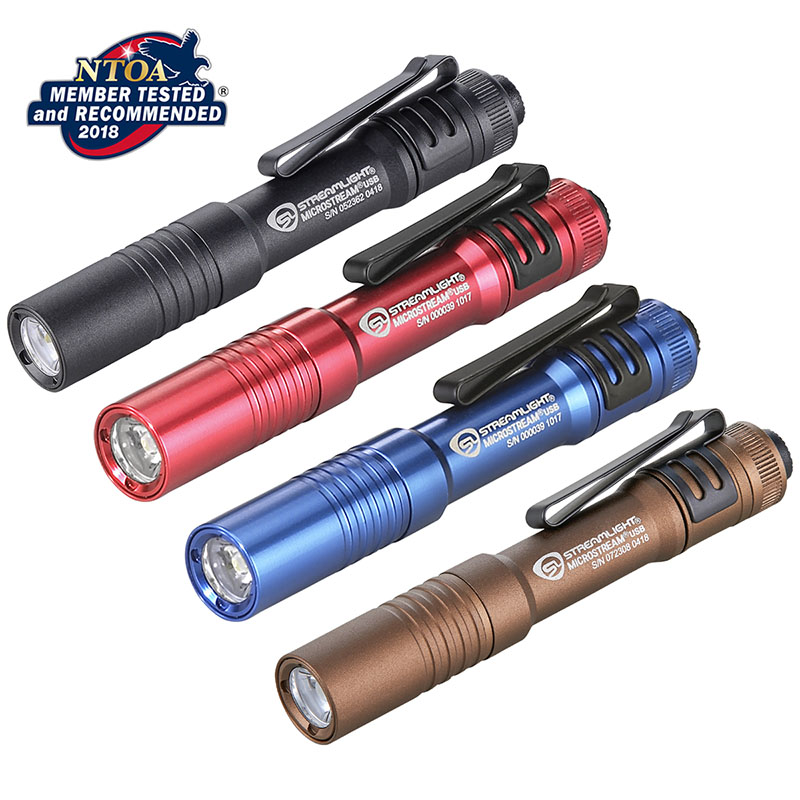
2. Streamlight Microstream USB — Best EDC
At $20 and 1.2 ounces, the Microstream is the light you clip to your pocket and forget about — until you need it. It runs on a rechargeable AAA battery with USB charging, keeping things simple.
Pros:
- Ultra-light at 1.2 oz — disappears in a pocket
- $20 price point makes it easy to buy multiples
- IPX4 water resistance handles rain
Cons:
- 250 lumens won’t illuminate large outdoor areas
- Short runtime on high (1.5 hours)
Our Take: The best “always have it on you” light. We keep one on a keychain and another in the glovebox. At this price, there’s no excuse not to carry one.

3. Fenix PD25R — Best Mid-Range
The Fenix PD25R splits the difference between pocket-friendly and powerful. At 800 lumens with USB-C charging, it handles everything from a power outage at home to navigating a dark parking garage.
Pros:
- 800 lumens with solid 2.5-hour runtime on high
- USB-C charging — universal cable compatibility
- IP68 rated — dustproof and waterproof
Cons:
- Slightly heavier at 2.8 oz than ultralight options
- 16340 battery is less common than AA/AAA
Our Take: The practical choice for someone who wants real performance without premium pricing. A solid middle ground for any emergency kit.
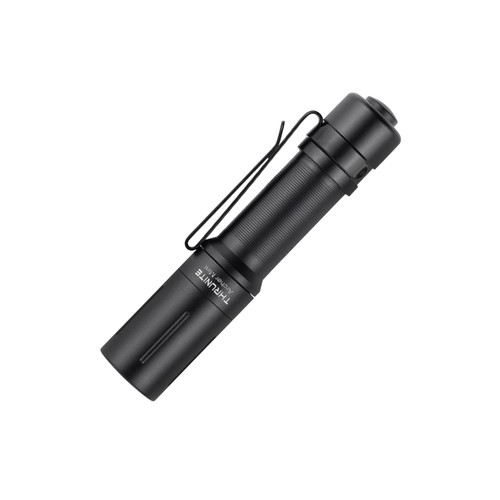
4. Thrunite Archer Mini — Best Budget
The Archer Mini matches the Microstream’s weight at 1.2 oz but nearly doubles the output at 405 lumens — and charges via USB-C instead of proprietary cables.
Pros:
- 405 lumens for $20 — excellent value
- USB-C rechargeable with bi-directional pocket clip
- Simple two-mode operation (no complicated menus)
Cons:
- IPX6 water resistance — not submersible
- Build quality feels less refined than Fenix or Olight
Our Take: The best budget flashlight on this list. If you’re building a kit on a tight budget, buy two of these instead of one premium light.

5. Nitecore EDC 29 — Best Premium
At 6,500 lumens with an LCD display showing battery level and output mode, the Nitecore EDC 29 is the most capable light here. Its flat, ergonomic design fits in a pocket despite serious power.
Pros:
- 6,500 lumens — illuminates entire streets and yards
- LCD display shows real-time battery and mode status
- Flat design with USB-C fast charging
Cons:
- Heavy at 5.5 oz for everyday pocket carry
- $110 is overkill if you just need basic emergency light
Our Take: This is for the person who wants the best and doesn’t compromise. In a real crisis — a building evacuation, a search scenario, signaling rescue — this light earns its price.
Do NOT Buy This If
- Streamlight Microstream: Don’t buy if you need to light up large areas. 250 lumens is for close-quarters tasks only.
- Olight Baton 3: Skip if you need field-replaceable batteries. The proprietary cell can’t be swapped at a gas station.
- Fenix PD25R: Pass if ultralight carry is your priority. It’s the heaviest pocket light here.
- Thrunite Archer Mini: Avoid if you need full waterproofing. IPX6 won’t survive submersion.
- Nitecore EDC 29: Don’t buy if you just need a backup light. You’re overpaying for features most people won’t use.
Buyer’s Guide: Choosing a Flashlight for Emergencies
Lumens: 200-500 handles indoor tasks and close navigation. 800-1,200 covers outdoor use and signaling. 3,000+ is for search and rescue scenarios.
Battery Type: USB-C rechargeable is most convenient in urban settings. Lights that also accept standard batteries (AA, AAA) give you a backup when charging isn’t an option.
Runtime: Look for 1-2 hours on high and 10+ hours on low. In a multi-day outage, you’ll spend most of your time on the lowest useful setting.
Durability: IPX4 minimum for rain. IPX8 if flooding is a concern. Aluminum construction survives drops that would shatter plastic.
Size: For everyday carry, stay under 4 inches and 3 oz. For a kit light, size matters less — prioritize output and runtime.
Frequently Asked Questions
How many lumens do I actually need for a power outage?
200-400 lumens is enough to navigate your home, find supplies, and check on neighbors. You don’t need thousands of lumens unless you’re outdoors or signaling from a distance.
Should I keep a flashlight or use my phone?
Always have a dedicated flashlight. Your phone’s light drains the battery you need for communication and emergency calls. A flashlight runs for hours on a fraction of the energy.
How do I store flashlights long-term in an emergency kit?
Remove batteries to prevent corrosion. Store lithium batteries separately — they hold charge for years. Check your kit every 6 months and test each light.
Are rechargeable flashlights reliable enough for emergencies?
Yes, if you keep them charged and pair them with a power bank. For true grid-down scenarios, also keep a light that runs on standard disposable batteries as a backup.
Can a flashlight be used for self-defense?
A bright light (1,000+ lumens) can temporarily disorient someone in a dark environment. Some models have crenelated bezels for striking. But a flashlight is a tool first — not a weapon.
Sources
- Ready.gov — FEMA emergency preparedness guidelines
- FEMA — Disaster kit recommendations including lighting
ISOPREP.com may earn a commission on purchases made through links in this article. This does not affect our editorial independence or product ratings.
Stay safe out there.
— ISOPREP Team
LUCK: Preparation meets Opportunity.
Get the 72-Hour Emergency Kit Checklist
Free PDF download. No spam. Unsubscribe anytime.